

How to Prevent Customer Churn: 5 Warning Signs to Watch and Win Them Back
Learn More


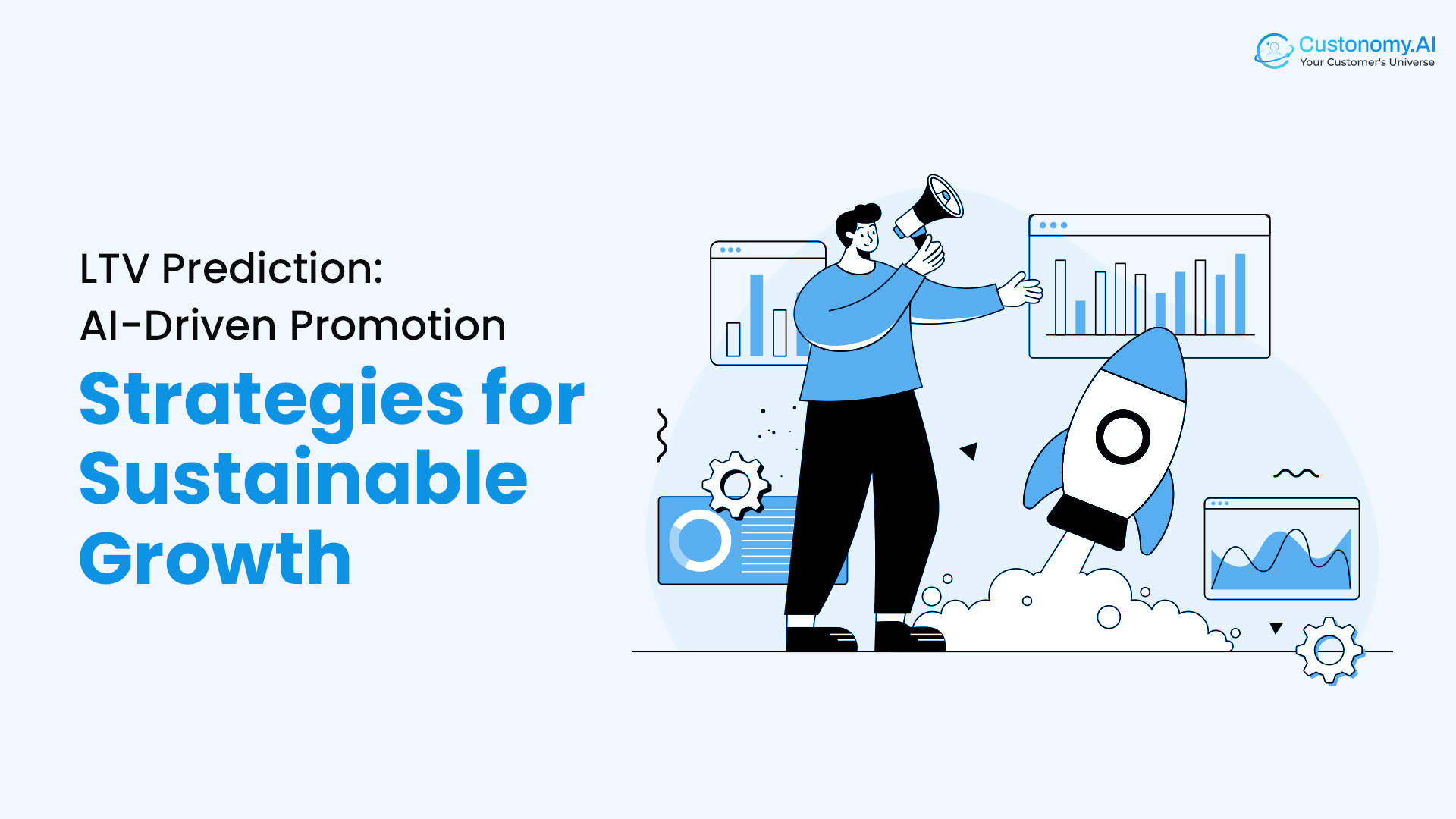
This makes Customer Lifetime Value (LTV), the total revenue a customer is expected to generate throughout their relationship a powerful strategic lever. The higher your LTV, the more sustainable and profitable your growth.
Yet, traditional LTV calculations often fall short: they’re historical, lagging, and reactive. Enter AI-powered LTV prediction, which empowers businesses to forecast future customer value and craft precise, personalized promotional strategies moving away from blanket discounting and toward smarter, more profitable engagement.
Customer Lifetime Value is the estimated total revenue a brand can expect from a customer over the entire duration of their relationship. LTV prediction goes a step further using AI and machine learning to forecast that value into the future, based on both historical data and real-time behavioural signals.
By combining these inputs, AI models can segment customers by predicted value, helping brands identify:
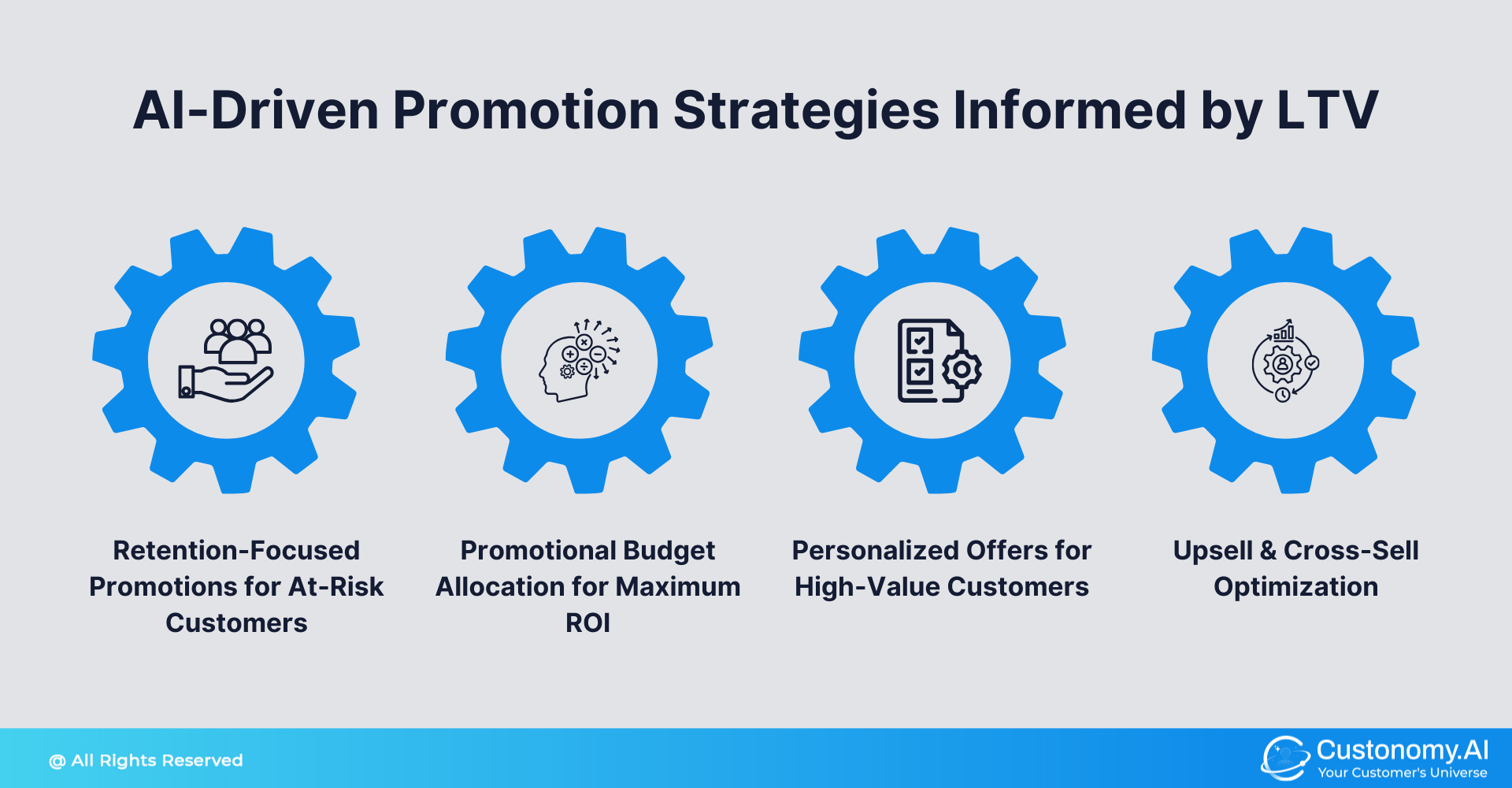
When you know a customer’s predicted LTV, promotions shift from being broad, untargeted campaigns to strategic, data-backed investments. AI empowers brands to design offers that maximize returns and minimize waste.
Identify customers showing early signs of disengagement and use targeted incentives to re-engage them before churn occurs.
Example: A cosmetics retailer notices high-value customers haven’t purchased in 90 days; AI triggers a personalized “We Miss You” campaign with a free sample of a trending product.
Direct promotional spend toward segments with the highest projected return, while reducing budget allocation to low-value, low-engagement groups.
Example: A grocery chain uses AI to identify households with high organic food spending and targets them with bundled promotions on fresh produce and sustainable products.
Create exclusive promotions for top-tier customers to deepen loyalty, increase frequency of purchase, and encourage premium product adoption.
Example: A premium coffee brand identifies its top 5% spenders and offers them early access to a limited-edition blend, paired with a subscription discount.
Leverage predictive insights to recommend complementary products or higher-value alternatives, increasing basket size and overall revenue.
Example: A sportswear brand suggests matching accessories (caps, socks) to customers buying premium running shoes timed to arrive in their feed within hours of purchase.
AI optimizes not only who receives promotions but also what they receive, when they receive it, and how much budget is allocated, ensuring every promotional dollar drives sustainable growth.

Stop Guessing. Start Growing. Use AI-powered LTV Prediction to Make Every Promotion a Revenue Driver, not a Cost Center.
Mass discounting might deliver short-term sales spikes, but it can quietly erode margins, train customers to wait for sales, and dilute brand equity. Over time, this approach makes growth less sustainable.
An LTV-driven, AI-powered promotion strategy flips the equation. Instead of pushing the same offers to everyone, you focus on the right segments, with the right incentive, at the right moment, driving higher ROI without overspending.
This precision targeting not only increases campaign effectiveness but also ensures long-term profitability, because promotional spend is treated as an investment not an expense.
Tracking the right metrics ensures your AI-powered, LTV-driven promotion strategies are delivering measurable business impact.
By monitoring these metrics, businesses can refine AI models, improve targeting accuracy, and create a self-reinforcing cycle of smarter promotions and higher profitability.
Implementing AI-powered LTV prediction is most effective when approached in clear, strategic stages.
Bring together all transactional, behavioral, and demographic data into a unified system, such as a CDP like Custonomy. A single source of truth ensures AI models work with complete and accurate inputs.
Clarify whether your focus is on retention, upselling, cross-selling, or promotional efficiency. Having a clear objective ensures your LTV model and campaign strategy are aligned with the outcomes that matter most.
Select algorithms suited for LTV prediction such as regression models, survival analysis, or deep learning based on your data volume, complexity, and time horizon. The right model can make the difference between approximate estimates and actionable forecasts.
Test your predictions and promotion strategies on a smaller, well-defined audience. A pilot reduces risk, validates the accuracy of your predictions, and provides valuable insights before scaling.
Once validated, roll out your LTV-driven promotion strategy across relevant segments. Automate data updates and campaign triggers to maintain timeliness and efficiency without adding operational burden.
Monitor results against your KPIs, feed fresh data into your models, and adjust targeting strategies as customer behavior evolves. This keeps your predictions accurate and your promotions relevant over time.
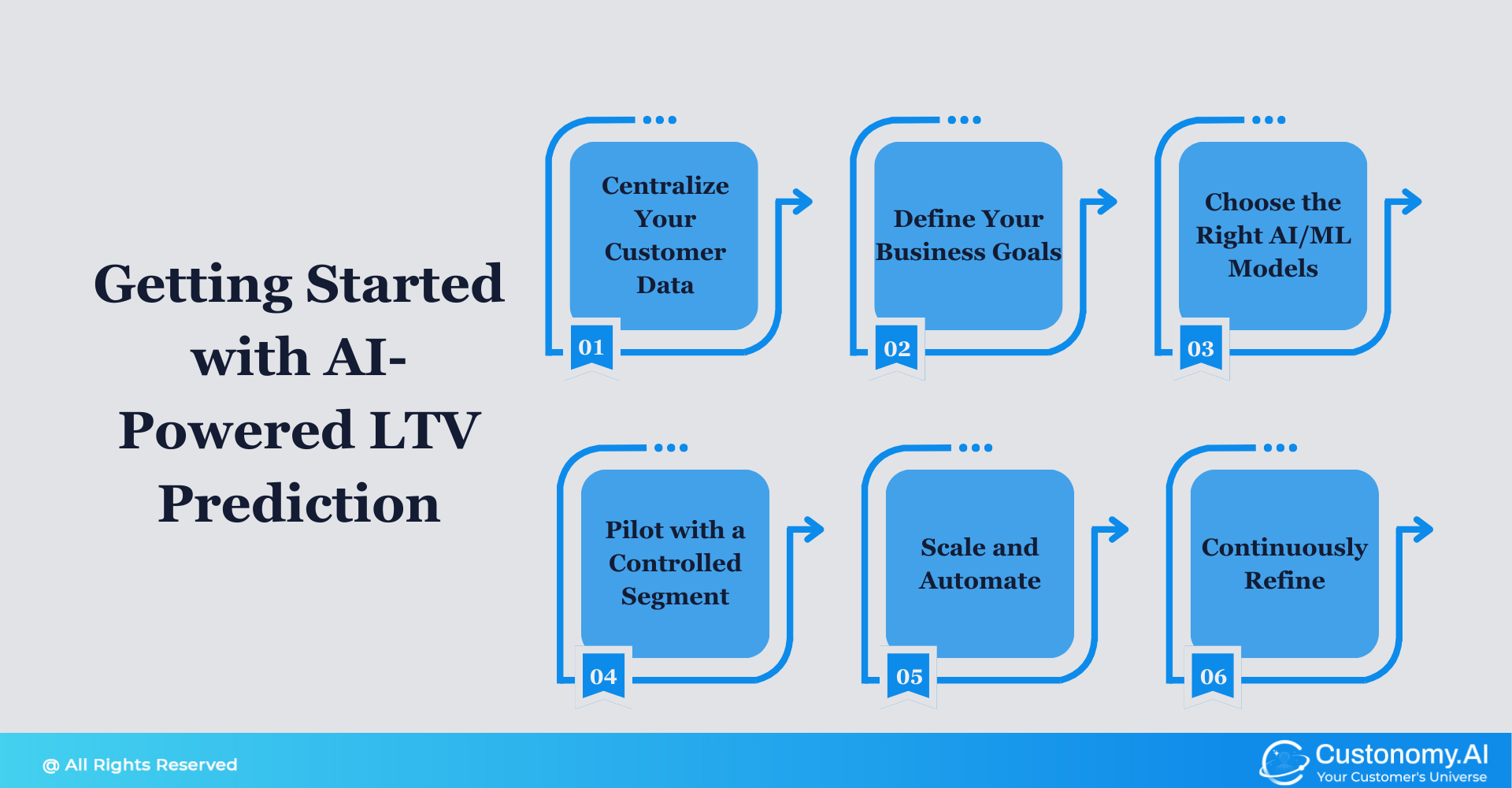
If you follow these steps, you will move from guesswork marketing to data-driven growth, with every promotion working harder toward long-term profitability.
AI-powered LTV prediction is a strategic capability that reshapes how brands approach promotions. By predicting future customer value, you can focus your efforts on the customers and segments that will drive sustainable, long-term growth.
Instead of competing on blanket discounts, you compete on precision, personalization, and profitability. Over time, this shift not only improves marketing ROI but also strengthens customer loyalty and brand equity.
Ready to Move Beyond Guesswork Promotions? Harness the Power of Predictive Analytics to Craft Promotions that Resonate, Retain, and Return Maximum Value.
Learn How Custonomy’s AI-native CDP can Help you Get There.