In today’s competitive landscape, where customer expectations are rising and supply chain pressures squeeze margins, retailers and CPG brands need a smarter approach. The key lies in understanding promo sensitivity; how different customer segments respond to discounts and using that insight to optimize offers without giving away unnecessary margin.
What is Promo Sensitivity?
Promo sensitivity refers to how strongly customer demand changes in response to a discount or promotional offer. Some customers are highly price-sensitive, they will only purchase if there’s a deal.
Others, especially loyal or high-value customers, may not need deep discounts at all to convert. The challenge is that promo sensitivity isn’t uniform.
It varies across:
- Channels: online shoppers might react differently to discounts compared to in-store buyers.
- Products: staples and essentials may require fewer promotions than discretionary items.
- Customer segments: e.g., bargain hunters vs. brand-loyal shoppers.
When retailers apply blanket discounts, they ignore these differences. That often leads to unnecessary margin erosion.
Understanding promo sensitivity allows retailers and CPG brands to tailor promotions with precision, maximizing sales where they are needed while protecting margins elsewhere.
Common Challenges with Promotions in Retail & CPG
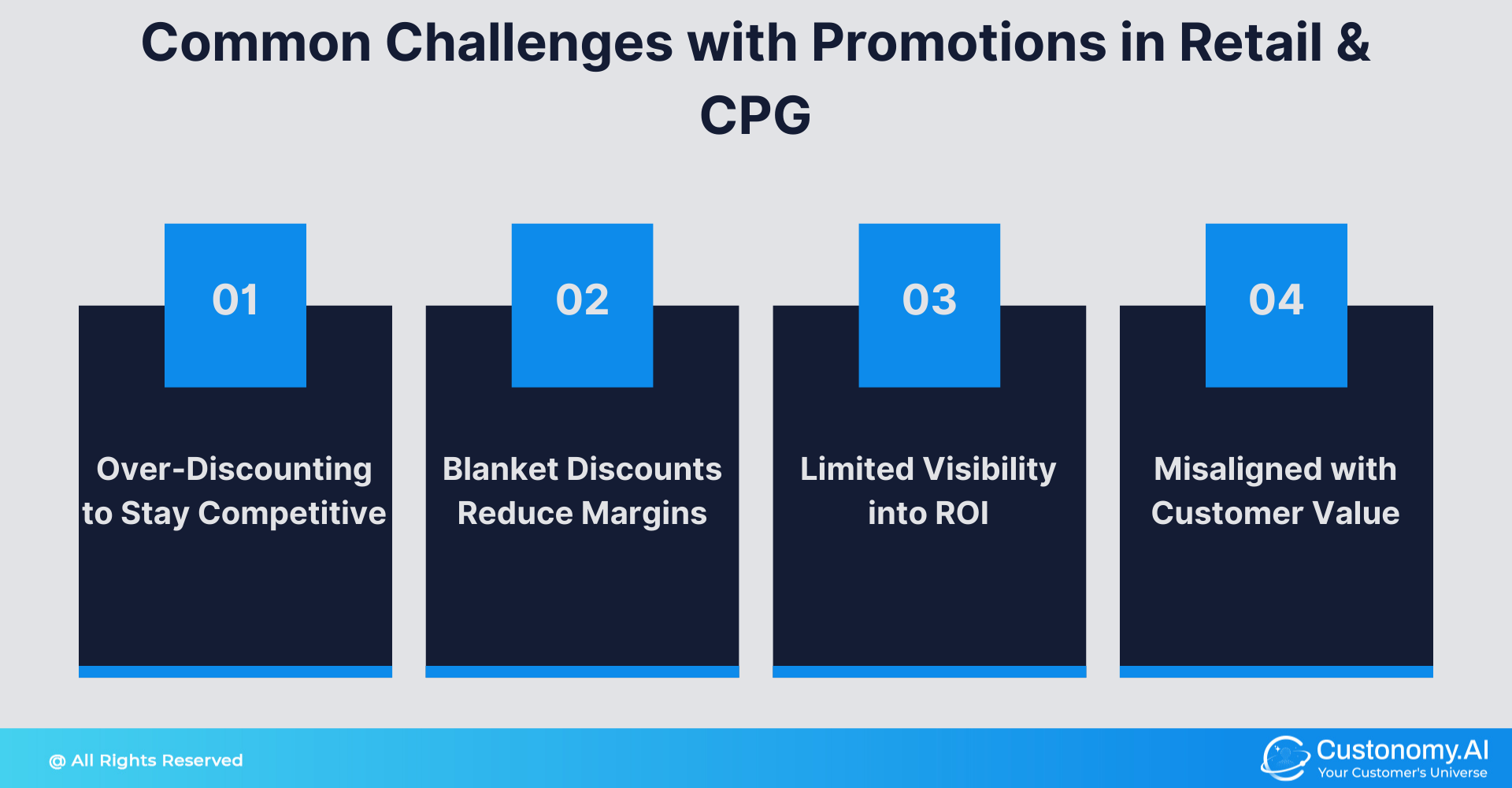
While promotions are a proven way to drive short-term sales, they often create long-term problems if not managed strategically. Some of the most common challenges include:
- Over-Discounting to Stay Competitive: In highly competitive markets, brands often respond to rival discounts with deeper cuts of their own, without analyzing true customer demand elasticity. This triggers a “race to the bottom.
- Blanket Discounts Reduce Margins: Retailers often roll out one-size-fits-all discounts like “Flat 30% off storewide.” While simple, this approach gives away unnecessary margin to customers who would have purchased without the discount.
- Limited Visibility into ROI: Many retailers struggle to measure the effectiveness of promotions. Without understanding which campaigns actually drive incremental sales, brands continue investing in promotions that fail to deliver profitability.
- Misaligned with Customer Value: High-value, loyal customers may not need deep discounts to stay engaged, while price-sensitive customers require sharper offers. Failing to differentiate leads to wasted promotional spend.
The result? Retailers end up trapped in a cycle of heavy discounting, sacrificing long-term profitability for short-lived sales spikes.
The Role of AI in Promo Sensitivity
Traditional promotion planning relies heavily on gut instinct, past sales averages, or competitor actions. While these methods offer some guidance, they fail to capture the complexity of modern customer behavior.
This is where AI transforms promo sensitivity analysis. AI can:
- Predict Optimal Discount Levels: By modeling price elasticity and customer lifetime value, AI can determine the minimum discount needed to trigger a purchase helping retailers avoid giving away more margin than required.
- Analyze Historical Purchase Behavior: Machine learning models examine years of transaction data to uncover how customers have responded to promotions across products, categories, and channels.
- Adapt in Real Time: Unlike static promotions, AI-driven systems can adjust offers dynamically based on inventory levels, competitor pricing, seasonality, or even customer browsing behavior.
- Segment Customers by Sensitivity: AI identifies distinct groups such as bargain hunters, promotion-neutral customers, and loyal buyers, so promotions can be targeted with precision.
In short, AI equips retailers and CPG brands with the ability to shift from blanket discounting to intelligent, margin-protecting promotions.
Conclusion: Winning the Churn Battle
Customer churn is inevitable, but it doesn’t have to drain your revenue. The key to success lies in spotting the early warning signs—declining engagement, negative feedback, reduced purchases, cancellations, and ignored upsells—and acting fast with targeted strategies.
By focusing on customer experience, personalization, and proactive engagement, businesses can prevent churn, boost loyalty, and secure long-term profitability.
Preventing churn is not just about saving customers—it’s about future-proofing your business. Connect with our experts to learn how Custonomy can help.
Ready to See How AI can Transform your Promotions into Profit Drivers? Take the First Step Toward Smarter, Margin-Friendly Discounting.
Benefits of Optimizing Promo Sensitivity
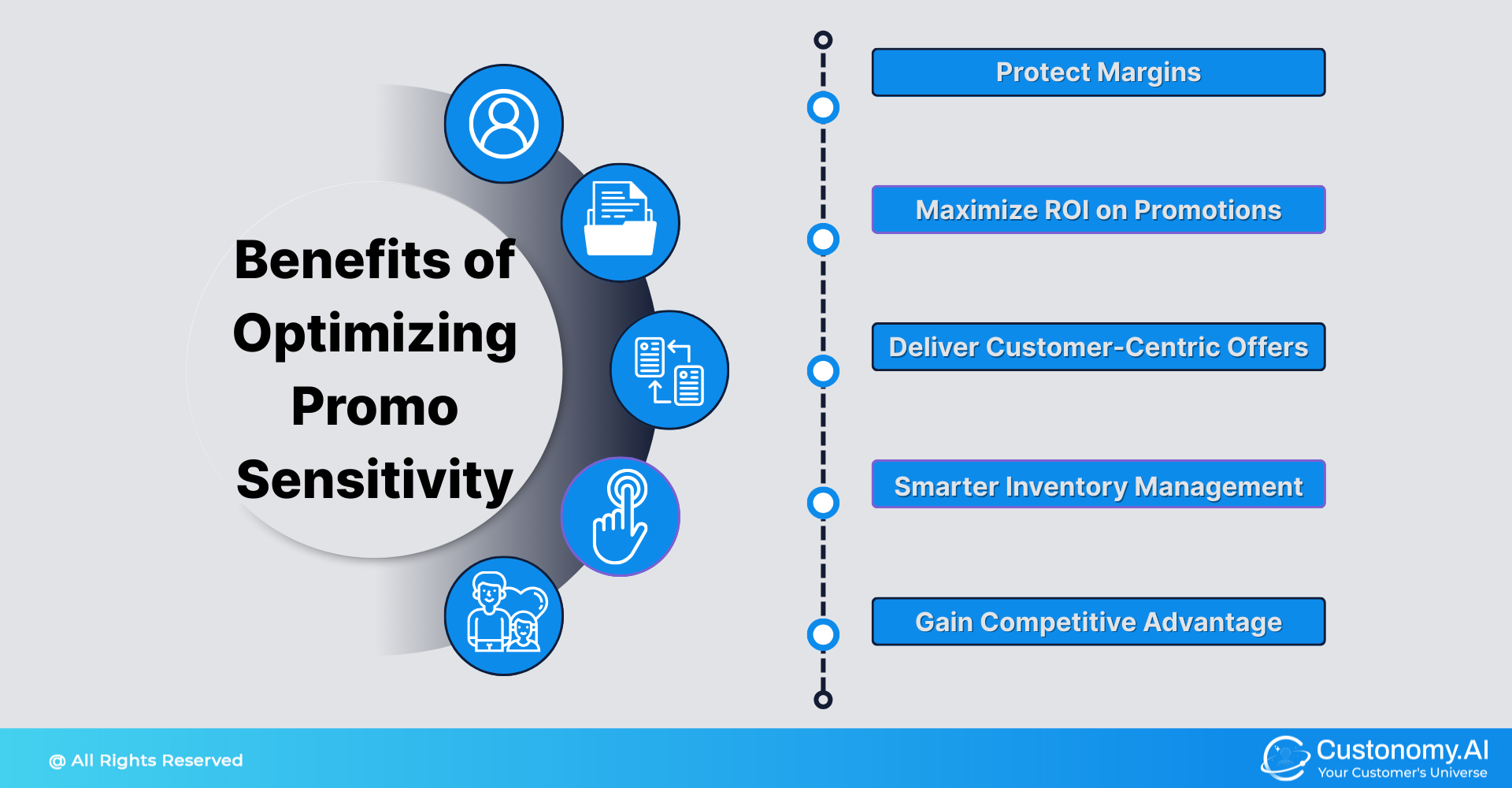
By moving away from blanket discounting and adopting a data-driven approach, retailers and CPG companies unlock significant benefits:
- Protect Margins: Avoid unnecessary deep discounts by offering just the right incentive for each customer or product. This ensures profitability isn’t sacrificed for volume.
- Maximize ROI on Promotions: Promotional budgets are spent where they create true incremental sales, instead of subsidizing purchases that would have happened anyway.
- Deliver Customer-Centric Offers: Personalized promotions resonate more with shoppers, strengthening loyalty and increasing engagement without eroding trust in pricing.
- Smarter Inventory Management: Align promotions with stock levels, accelerate sell-through of slow-moving items while maintaining profitability on high-demand products.
- Gain Competitive Advantage: By tailoring discounts with precision, brands can outmaneuver competitors who rely on blanket, margin-eating offers.
Ultimately, optimizing promo sensitivity creates a win–win: customers feel valued with relevant offers, and retailers protect margins while driving growth.
How Custonomy Enables Promo Sensitivity Optimization
Most retailers know promotions are costly, but very few have the tools to measure and optimize them effectively. This is where Custonomy’s AI-native Customer Data Platform makes the difference.
Custonomy enables brands to:
- Unify Customer Data into a 360° View: Bring together transactions, browsing history, loyalty data, and campaign responses to understand customer behavior at a granular level.
- Segment Customers by Promo Sensitivity: Identify which customers are highly price-sensitive, which respond to light incentives, and which convert with no discount at all.
- Run AI-Powered Discount Simulations: Test different promotional scenarios across segments to see how sales, margins, and inventory will be impacted before launching the campaign.
- Track and Refine in Real Time: Custonomy’s analytics dashboards measure the true ROI of promotions, helping teams adjust strategies dynamically for maximum profitability.
- Integrate with Marketing & Pricing Systems: Automatically deliver optimized promotions across email, mobile, eCommerce, and in-store channels without adding operational complexity.
With Custonomy, retailers and CPG leaders can finally break free from the cycle of blind discounting and shift toward intelligent, customer-centric promotions that drive sustainable growth.
Best Practices for Retailers & CPG Leaders
Optimizing promo sensitivity isn’t about eliminating discounts, it’s about using them smarter. Here are some best practices that leading retailers and CPG brands follow:
- Align Promotions with Business Goals: Use promotions strategically, whether it’s boosting customer retention, clearing seasonal stock, or winning new customers rather than discounting for the sake of it.
- Avoid the “Promotion Trap”: Resist the temptation of constant deep discounting, which conditions customers to wait for sales. Instead, deliver targeted, meaningful offers that reinforce brand value.
- Monitor ROI in Real Time: Tracking not just lifts sales but also impacts margin and long-term customer value. Use AI-driven insights to refine campaigns dynamically.
- Test and Learn Continuously: Run controlled experiments with varying discount levels across segments or products to uncover the “sweet spot” for conversions.
- Segment Customers by Value and Sensitivity: Treat a loyal, high-LTV customer differently than a deal-driven shopper. Align discounts with each segment’s behavior.
- Analyze Data, Eliminate Guesswork: Analyze historical promotions, customer segments, and product-level performance to identify patterns before planning new campaigns.
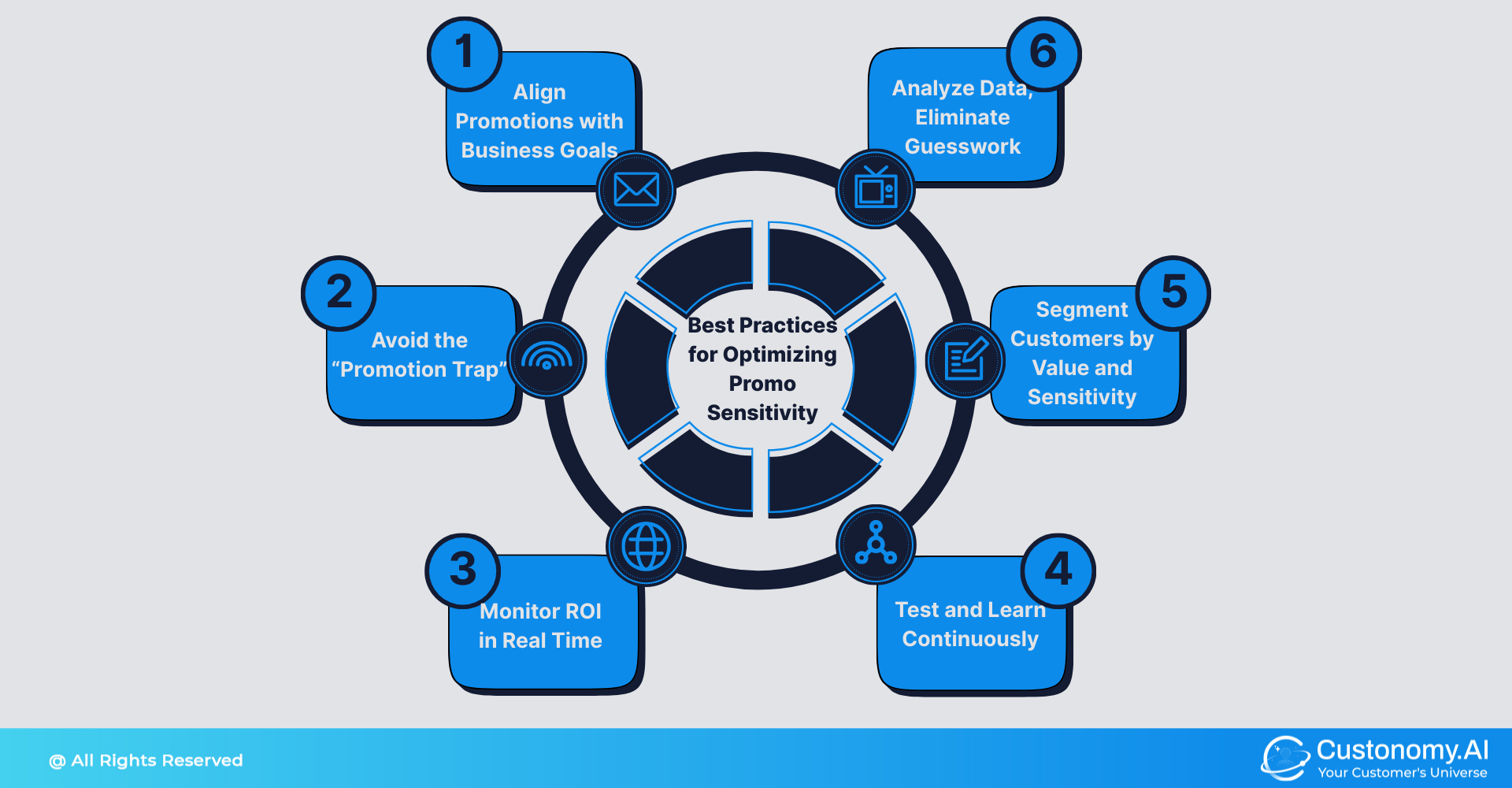
When executed with precision, these practices help brands strike the right balance between customer satisfaction and margin protection.
Conclusion
Promotions will always be a vital lever for retailers and CPG brands. The real challenge is ensuring they drive profitable growth rather than eroding margins.
By understanding and optimizing promo sensitivity, brands can move away from blanket discounting and toward data-driven, customer-centric offers that deliver maximum impact. With AI-powered insights, businesses can uncover the true drivers of promo response, personalize offers at scale, and protect profitability without sacrificing customer engagement.
Custonomy makes this possible. As an AI-native Customer Data Platform, it empowers retail and CPG leaders to design promotions that balance sales lift with margin discipline, ensuring sustainable growth in a competitive marketplace.
Ready to Stop Losing Profits to Over-Discounting? Discover How Custonomy can Help you Optimize Promotions with AI-Driven Precision.